Before you book a private Maui tour, picture the day itself: who is in the vehicle, what everyone wants to understand, how much walking feels comfortable, and how you want to feel when you return. A useful booking checklist starts there. The name of the tour and a beautiful photograph cannot answer those questions for you.
We believe a private guide should make the island more understandable. The value includes interpretation, planning, and the judgment to respect a boundary or change course. Use the questions below to compare a real experience, including the responsibilities that come with visiting someone else’s home.
People
Describe the group and its practical needs.
Place
Choose the landscape and story you care about.
Plan
Confirm the route, vehicle, inclusions, and terms.
1. Choose the purpose of your Maui day
Start with one sentence: “We want to understand East Maui’s rainforest and communities,” or “We want a mountain day with views and short walks.” A clear purpose helps a guide suggest a route and helps you compare offers that otherwise sound similar.
Make a short list of priorities and a separate list of optional ideas. If everything is essential, the schedule will have little room for traffic, questions, food, or the unexpected discovery that someone wants to linger. A private day should give attention to the places you choose.
Our custom itinerary guide explains how to discuss that balance. It also describes why private does not mean unlimited mileage, unrestricted access, or every region of Maui in one day.
2. Confirm who will guide you and what they explain
Ask about experience with your chosen route and interests. If Hawaiian history, plants, or agriculture matter to you, ask how the guide approaches those subjects. A useful answer describes how they interpret a place, acknowledge sources, and respect cultural boundaries.
Be cautious about choosing solely on promises of secrets or access other people cannot have. We want visitors to leave with a deeper understanding, not the idea that paying for a tour overrides an owner’s wishes. Credentials and special permissions should be described accurately, not inferred from marketing language.
Our guide to a private guide’s role offers questions that go beyond who does the driving. It can help you assess whether the experience fits your curiosity as well as your schedule.

3. Ask how history becomes part of the visit
This archival view of the ʻUlupalakua guest house invites questions about work, hospitality, and changes in the built landscape. Ask whether the tour makes room for those connections and explains what a historic record can—and cannot—tell us about a community.
History is also living responsibility. The history of Kahanu Garden describes decades of work to stabilize Piʻilanihale and care for its surrounding plant collections. Visiting a maintained cultural place involves people’s continuing work; it is not simply discovering something untouched.
If a garden or cultural program interests you, confirm its own admission and guide arrangements. Do not assume it can be added to any route on the day. A well-planned visit gives the host organization appropriate time and support.
4. Match the actual vehicle to the actual group
An open-air Bronco and an enclosed SUV offer different experiences. Consider shelter, conversation, entry height, seating, luggage, and exposure to weather. Ask which vehicle will be assigned and what happens if a substitution becomes necessary.
Give the operator children’s ages and restraint needs, plus the dimensions of mobility equipment or bulky items. Passenger capacity and useful storage are practical facts to confirm. A vehicle that feels spacious for one group may not meet another group’s needs.
| Question to ask | Why the answer matters |
|---|---|
| Is the vehicle private for our party? | Private transport and a small shared tour are different products. |
| Which seats and restraints are available? | Every passenger needs a suitable confirmed arrangement. |
| Can our equipment fit? | A folded walker, wheelchair, stroller, or large bag changes the space needed. |
| What assistance is available? | A luxury vehicle is not automatically accessible or staffed for transfers. |
| Is the experience enclosed or open-air? | Weather exposure and ease of conversation can affect comfort. |
5. Describe walking and comfort needs clearly
Tell the operator how long everyone is comfortable walking, whether steps or uneven ground are difficult, and how the group handles winding roads. Specific examples help: “We prefer short walks and a place to sit” is more informative than asking for an easy tour.
Ask which advertised stops require a walk from parking and which can be enjoyed with less physical effort. Confirm restroom planning and meals, including any dietary restrictions. If someone prefers to skip an activity, discuss how the rest of the group and the guide will handle that choice.
Use our senior travel planning guide or Hāna with kids guide for more focused questions. Choose based on needs, not stereotypes about age.
6. Settle pickup, duration, and the return
Confirm the precise pickup place, meeting instructions, and the time you should be ready. Ask whether the quoted duration describes the entire time away from your accommodation. A tour name such as half-day does not tell you everything: our Half-Day Hāna experience, for example, is listed at six hours.
If you have a flight, cruise departure, dinner reservation, or other fixed commitment, state it before booking. Ask whether the suggested route provides an appropriate margin. An ambitious itinerary should not depend on every road segment and stop taking the minimum possible time.
Agree on how to reach the office and what to do if the pickup arrangement changes. Save those instructions with your confirmation. Clear logistics let you spend the day listening and looking rather than trying to reconstruct a plan from several messages.
7. Separate the tour price from admissions and extras
Ask for the price for your exact group, vehicle, date, and duration. Clarify the treatment of taxes, admission fees, food, beverages, gratuity, extra passengers, and any additional time. If the rate is flat, confirm what it covers; the phrase alone does not answer those questions.
Some places require their own reservations. Waiʻānapanapa State Park is one example. Ask who makes the arrangements and whether a proposed visit is confirmed. A generic statement that the route is customizable does not establish admission.
Compare like with like. A guide-only service in your rental vehicle and a tour that includes a vehicle have different responsibilities and costs. Decide which arrangement you actually want before comparing the headline prices.
8. Read the change and cancellation terms
Use the terms attached to your actual booking, including the booking channel. Understand the cancellation deadline, what happens if part of the route is unavailable, and how any operator cancellation is handled. Ask for clarification before paying if the wording is unclear.
Weather flexibility should be part of the conversation. A changed stop can still produce a rewarding day when the guide explains the reason and offers an appropriate alternative. Do not accept an itinerary whose appeal depends on entering an area regardless of conditions.
Keep the confirmation and the description you agreed to. They are useful references for both you and the office, especially when multiple family members are arranging the trip.
A short message you can send before booking
“We are a group of [number] staying in [area] on [date]. Our main interest is [experience]. We are comfortable with [walking and drive length] and need [restraints, equipment, or dietary arrangements]. Please confirm the vehicle, pickup-to-return timing, included admissions and meals, total price, and cancellation terms.”
That message gives an operator enough information to make a specific recommendation. Add one question about the place’s history or ecology so the guide understands what you hope to learn.
When you are ready, explore Hawaii By Storm’s private tour options or call (808) 444-3770. The goal is a day you can look forward to with a clear understanding of both the experience and the care it deserves.
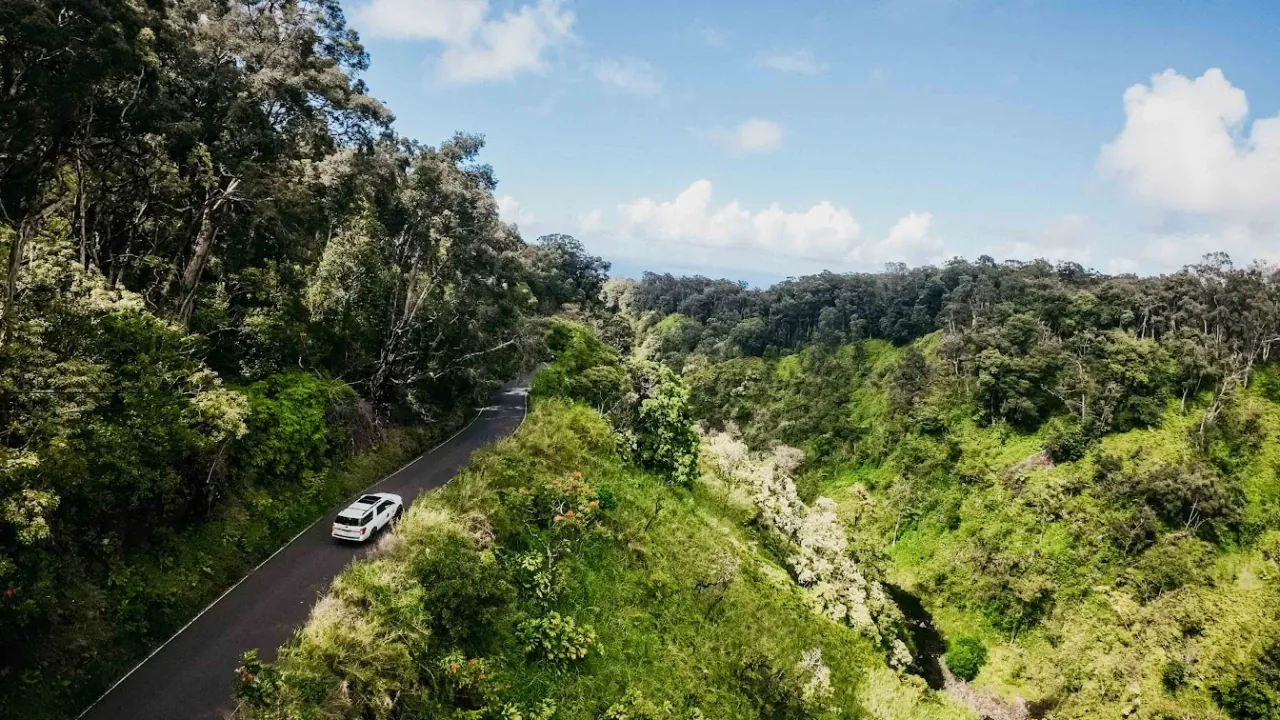
Hero photograph: The view from Wailua Valley State Wayside Boydsk2000 · CC BY-SA 4.0 · resized for web; derivative shared under CC BY-SA 4.0. Image record.