
Maui History Series · Park Cabins
Maui’s Historic Park Cabins: From Haleakalā to Waiʻānapanapa
Three 1937 trail-only National Park Service shelters and 12 state housekeeping cabins on the Hāna coast belong to different agencies, eras, landscapes, and reservation systems. Their histories meet in comparison—not in one blended booking guide.
Open the cabin historiesPhoto: Ekrem Canli source (opens in a new tab) · CC BY-SA 4.0 license (opens in a new tab) · cropped and resized; derivative shared under CC BY-SA 4.0
Two agencies · two landscapes
A backcountry shelter is not a coastal vacation cabin
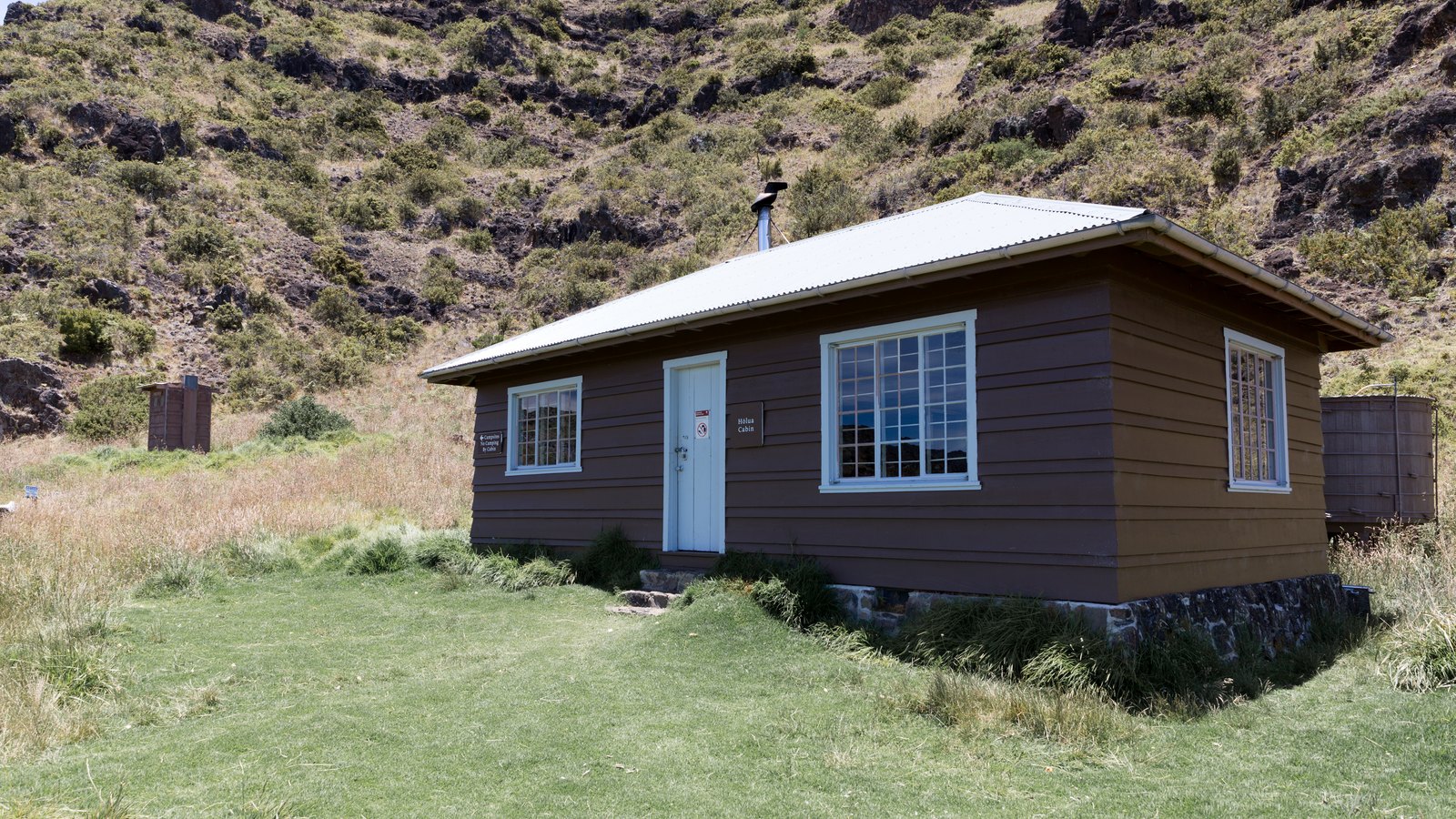
Hōlua, Kapalaoa, and Palikū were designed together as modest trail-only shelters within Haleakalā. Journeyman and contracted carpenters built them in 1937 while Civilian Conservation Corps workers improved trails and helped move materials by animal and human pack.
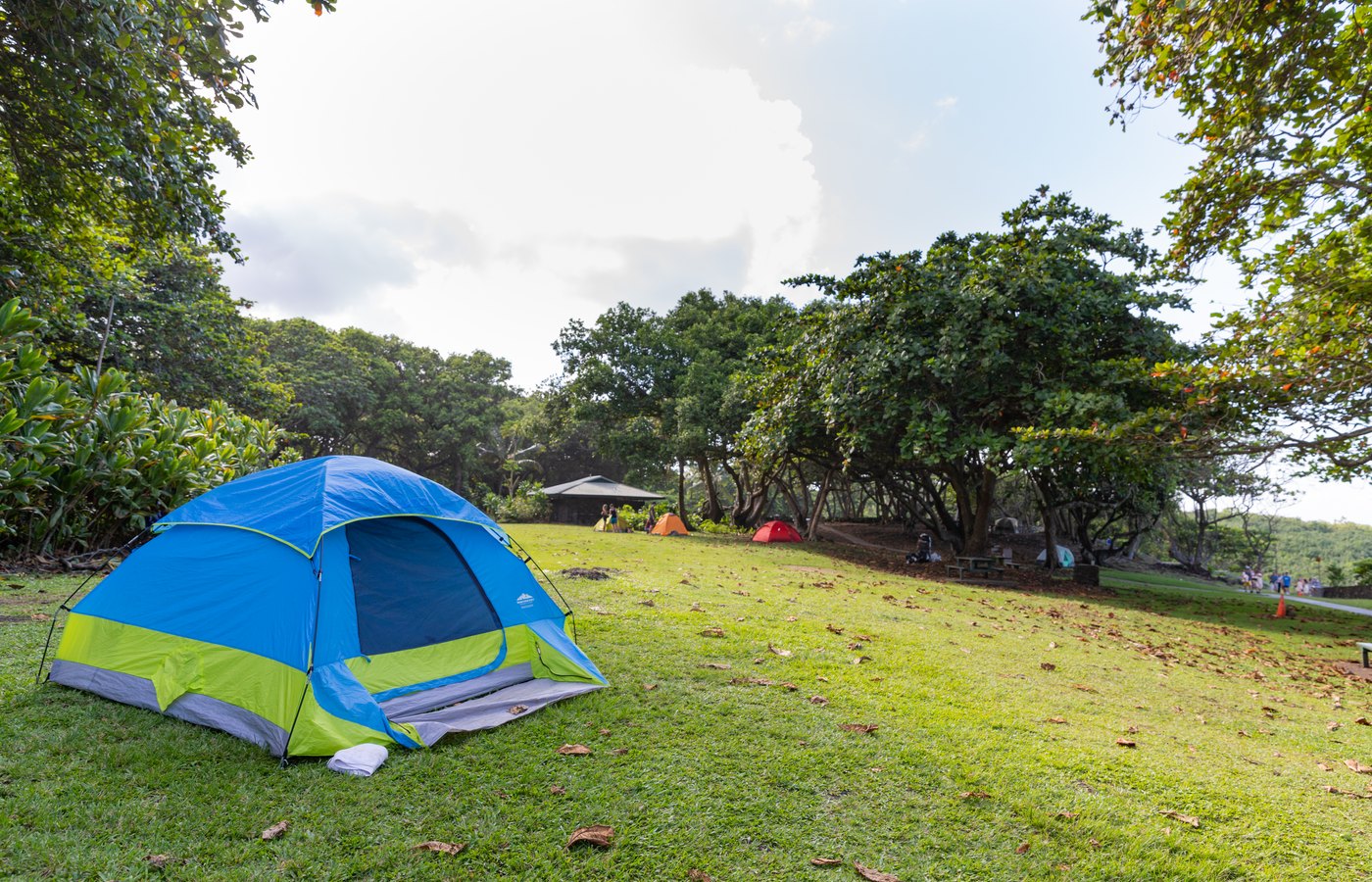
Waiʻānapanapa’s 12 state cabins came later within the older Honokalani Village cultural landscape. They are road-accessible housekeeping units with a different agency, reservation system, utility model, and access story. The modern cabins must never be labeled traditional Hawaiian hale or treated as the beginning of occupation at the coast.
Inside the summit depression
Three shelters reached only by trail
One rustic plan links three dramatically different settings—and the difficult supply route is part of the design story.
A repeated plan for a roadless interior
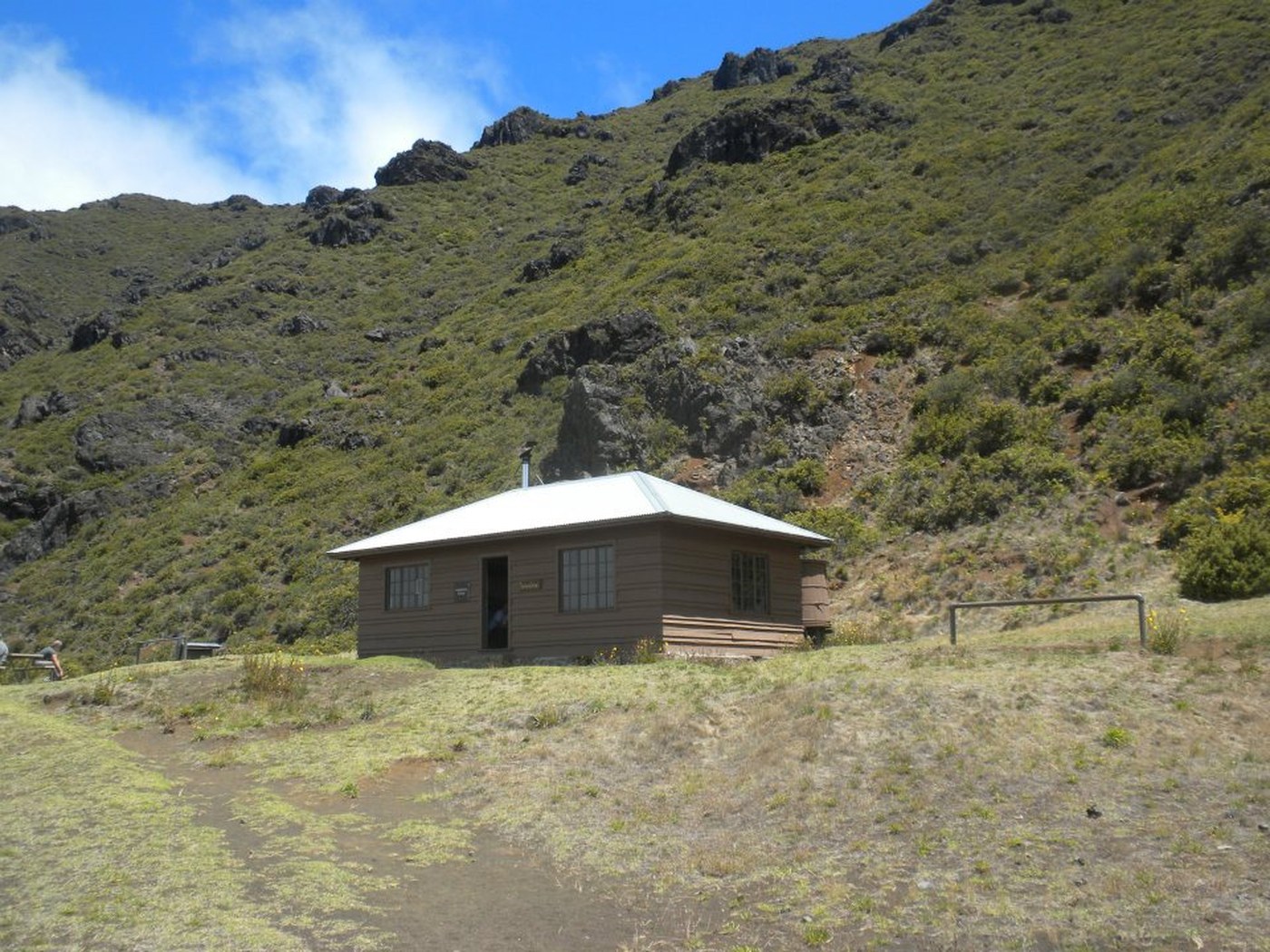
The 1935 master plan for the Haleakalā Section proposed three shelters inside the summit depression. NPS developed the standard Haleakalā Shelter Cabin plan in 1936, and Hōlua, Kapalaoa, and Palikū were completed in 1937.
Carpenters performed the cabin construction. CCC workers helped develop the surrounding nodes, improved trails, and carried lumber, tools, and supplies by mule, horse, and human pack. Saying the cabins were “built entirely by the CCC” would erase that division of labor.
One plan, three environments
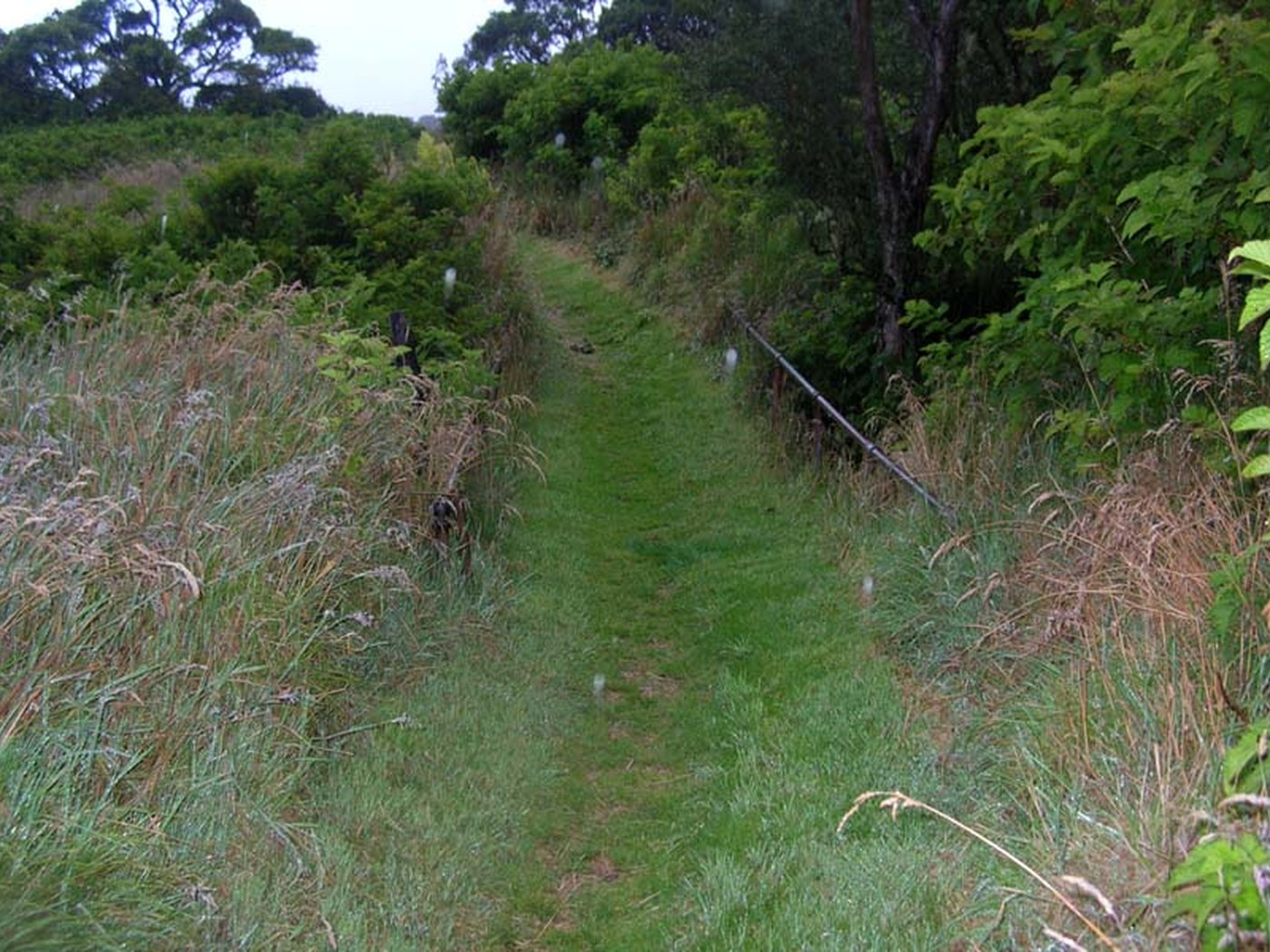
Hōlua sits in native shrubland near Koʻolau Gap. Kapalaoa occupies a drier, more open southern floor near Kaupō Gap. Palikū lies below wetter eastern cliffs where fog and rain are common. The repeated structure makes those environmental contrasts easier to read.
Together with 26.5 miles of historic trail, the developed nodes form the CCC Haleakalā Crater Trails District cultural landscape. The cabins predate federal wilderness designation; their historic sites remain developed exclusions within a much larger wilderness landscape.
Working shelters, not a drive-up lodge
Under normal operations, each cabin has 12 padded bunks, no electricity, and no reliable daily servicing. Hōlua requires a minimum 3.7-mile one-way hike; the other cabins are farther. Water is non-potable and can run out, weather can turn severe, and there is no cell service.
The current Tropical Storm Lala closure makes all three inaccessible. A future reservation will not override an NPS closure, trail condition, or emergency restriction.
-
1935
Three shelters are proposed
The park master plan places developed nodes inside the summit depression.
-
1936
A standard rustic design is completed
NPS develops the repeated Haleakalā Shelter Cabin plan.
-
1937
Hōlua, Kapalaoa and Palikū open
Carpenters and CCC-supported logistics complete the three trail shelters.
-
1974–76
Historic district and wilderness designations follow
The trail-and-cabin landscape gains historic recognition inside a larger wilderness.
-
2021
Reservations resume through Recreation.gov
The modern online permit system returns after pandemic closure.
-
August 2026
Storm closure blocks all access
Tropical Storm Lala damage assessment and repair close both national-park districts.
On the Hāna coast
Twelve state cabins on an older cultural landscape
Modern housekeeping cabins entered a place where Hawaiian settlement, fishing, farming, trails, and burial traditions long predated the state park.
Honokalani before the cabin complex
The Waiʻānapanapa Master Plan records Native Hawaiian use of the Honokalani landscape centuries before modern lodging. Settlement, agriculture, fishing, coastal trails, and sacred places make this a cultural landscape rather than an empty scenic parcel.
The page therefore does not call the state units Hawaiian hale, direct guests to burial or archaeological sites, or present the 1960s construction as the area’s first occupation.
Six cabins, then six more
Historical reporting says the first six one-bedroom, two-bunk cabins were nearing completion in 1966. DLNR records the property’s acquisition from Hāna Ranch in 1968, followed by plans and 1970 funding for six more units.
Public records do not fully explain why the first construction predates the stated acquisition. The page preserves both dates without inventing a land-control explanation. The result was the present 12-cabin state complex.
A different overnight model
Today’s Waiʻānapanapa units are furnished housekeeping cabins with a kitchen-living area, bathroom, electric stovetop, microwave, refrigerator, and hot shower. Guests supply bedding, towels, dishes, and utensils. The cabins accommodate up to six people and are managed by Hawaiʻi State Parks.
Overnight permits use Explore Outdoor Hawaiʻi. Nonresident timed day entry uses GoStateParks. Those are separate systems, and a Haleakalā Recreation.gov permit has no connection to either one.
-
Late 1200s–1300s onward
Archaeology records Hawaiian use
Documented settlement and cultural activity long predate modern cabins.
-
1966
First six cabins near completion
Historical reporting records the first state construction phase.
-
1968–70
Acquisition and second phase
The State records acquisition, plans, and funding that complete a 12-cabin complex.
-
1978
Larger property conveys to State Parks
Executive-order transfer places the park landscape under State Parks management.
-
February 2026
Overnight reservations move online
Maui lodging shifts to Explore Outdoor Hawaiʻi.
-
2026–27
Road and facility work continues
Construction affects circulation and campervan camping while cabin inventory remains live-system dependent.
What guests can notice
Compare design without confusing the systems
The cabins make sense when visitors read their access, utilities, agency, and surrounding landscape together.
- One plan, three summit settingsThe repeated Haleakalā form highlights Hōlua shrubland, dry Kapalaoa, and wet Palikū.
- The supply trailNo road reaches the summit shelters; their modest scale records animal-pack and hand-carry logistics.
- Historic nodes inside wildernessThe cabins predate wilderness designation and remain developed exclusions in the larger landscape.
- Coastal housekeeping designRoad access, grouped units, kitchens, bathrooms, and utilities identify a state lodging complex rather than an NPS shelter system.
Related Maui history & tours
Follow the connections
Continue with the places and experiences that share this chapter’s roads, water, communities, or working landscapes.
Continue the series
Link the cabins back to mountain and coast
Haleakalā National Park and Hāna Harbor explain the two landscapes and transportation systems surrounding these cabins.
Research notes
Sources & further reading
Closures, trails, fees, inventory, booking horizons, water, facilities, and construction are mutable. This comparison is dated August 20, 2026 and links directly to both live agency systems.
- National Park Service: Haleakalā wilderness cabins and normal reservation rules (opens in a new tab)
- National Park Service: CCC Haleakalā Crater Trails cultural landscape (opens in a new tab)
- National Park Service: Kapalaoa preservation and construction history (opens in a new tab)
- National Park Service: live Tropical Storm Lala closure alert (opens in a new tab)
- Hawaiʻi State Parks: Waiʻānapanapa State Park (opens in a new tab)
- Hawaiʻi State Parks: Maui camping and lodging (opens in a new tab)
- Explore Outdoor Hawaiʻi: current Maui overnight reservation system (opens in a new tab)
- GoStateParks: Waiʻānapanapa nonresident day-entry FAQ (opens in a new tab)
- State of Hawaiʻi: Waiʻānapanapa Master Plan Final EIS (PDF) (opens in a new tab)
- DLNR: Honokalani Village and Waiʻānapanapa cabin history (opens in a new tab)
- The Maui News archive: 1966 first-six-cabin construction report (opens in a new tab)
- The Maui News archive: 1970 second-six-cabin funding report (opens in a new tab)
- DLNR: 2026 Waiʻānapanapa construction and campervan closure notice (opens in a new tab)
- Hawaiʻi State Parks: current park notices (opens in a new tab)
- Hawaiʻi Trails: live State trail closures and notices (opens in a new tab)