

Maui History Series · Kahului Harbor
Kahului Harbor: From Canoe Landing to Working Port
The harbor outside your ship tells a story of Native Hawaiian coastal life, sugar and railroads, ambitious engineering, wartime change, and the growth of modern Central Maui.
Begin at the shorelineBefore the breakwaters
This was a living shore long before it was a port
Kahului Bay was never an empty place waiting to be developed. Native Hawaiian families fished, gathered marine resources, traveled by canoe, and lived around a shoreline connected to the royal fishpond and wetland complex at Kanahā.
The harbor visitors see today grew in layers. A landing and railroad first served Maui’s expanding sugar economy. Breakwaters, dredging, and concrete piers turned an exposed bay into a deep-draft harbor. The Navy, aviation, suburban growth, and modern shipping then reshaped the surrounding plain.
Shoreline · Sugar · Steam
The railroad built a port—and a town grew around it
Kahului’s transformation began with the need to move plantation cargo between Central Maui and ocean-going vessels. Rail, warehouses, tanks, wharves, and breakwaters became one connected industrial system.


A transportation system built for sugar
In 1879, a railroad connected the Kahului Harbor yard with the sugar mill in Wailuku. Incorporated as the Kahului Railroad Company in 1881, it became Hawaiʻi’s first steam railroad and first common carrier. The tracks reached Pāʻia in 1884 and Haʻikū in 1913, carrying sugar, pineapple, general merchandise, and passengers.
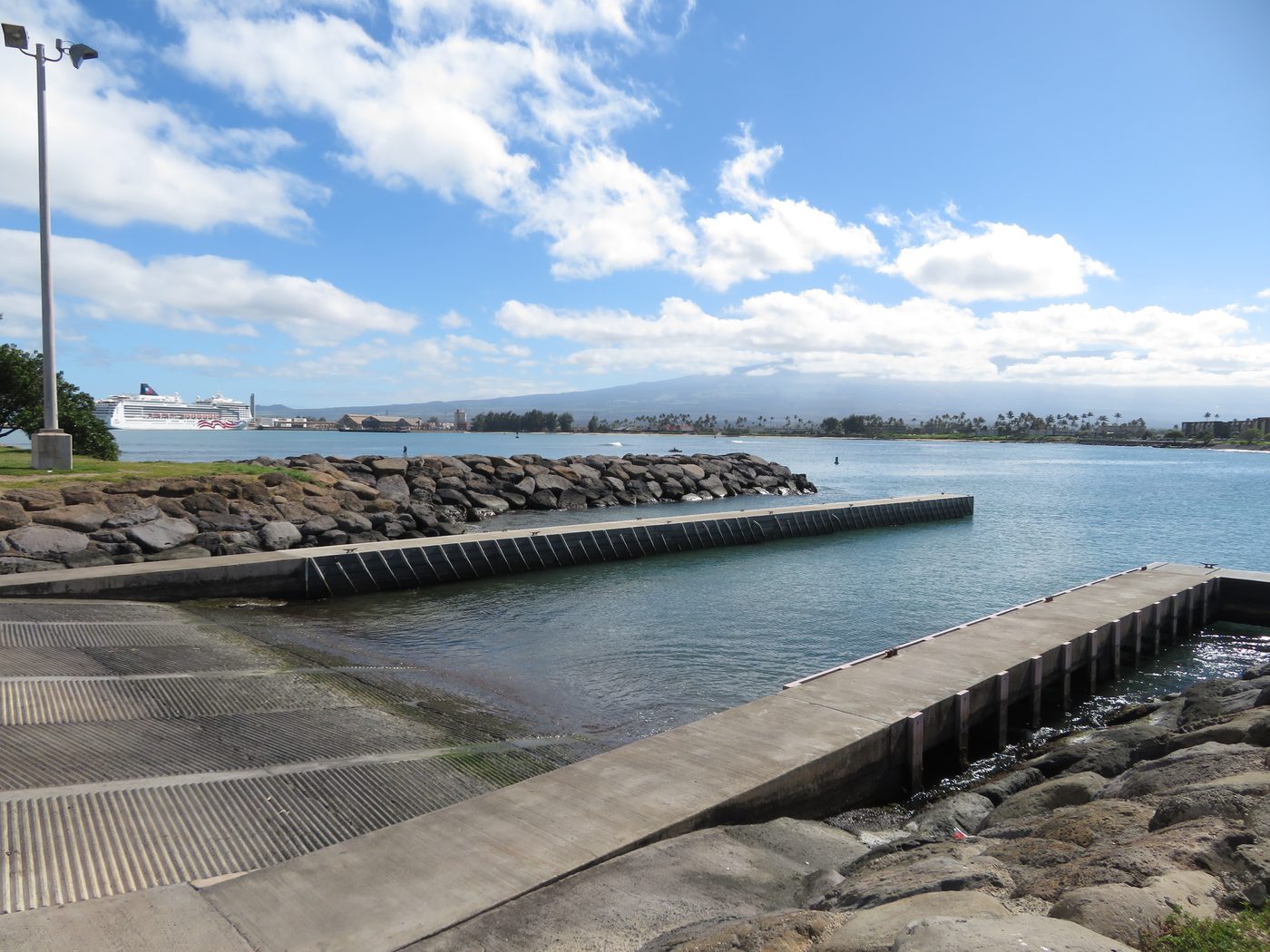
The original landing remained vulnerable to wind and surf. Kahului Railroad began harbor improvements around the turn of the twentieth century. Federal work followed in stages: the east breakwater was extended, dredging deepened the basin to 35 feet, a west breakwater sheltered the entrance, and new piers replaced earlier wharves. By the end of 1931, the basic deep-draft harbor arrangement visitors recognize today had taken shape.
The port and railroad did more than move crops. Their stores, warehouses, fuel and molasses tanks, repair shops, freight yards, and jobs helped make Kahului the industrial center of Maui’s central plain.
-
Before the port
A living coastal landscape
Canoe travel, fishing, gathering, and the Kanahā fishpond and wetland connect people to the bay.
-
1879–1881
Rail meets the landing
Track links the harbor and Wailuku mill; the Kahului Railroad Company is incorporated.
-
1910–1915
Federal work expands
Breakwater construction and harbor dredging create safer, deeper access.
-
1920s
The modern piers emerge
The west breakwater, Pier 1 work, and a concrete Pier 2 enlarge the commercial port.
-
1931
The harbor takes shape
Extended breakwaters and the deep basin establish the core modern configuration.
War · Air travel · Modern Maui
The harbor became the hinge of Central Maui
World War II, new transportation technology, and postwar development changed the land around the piers. The result is the mixed working landscape cruise guests see today.
From railhead to island gateway
New bulk-sugar loading facilities were built at Kahului in 1942, and bulk shipments began by 1943, replacing much of the labor of shipping sugar in sacks. During the same period, the Navy took over Pier 2 and nearby land for a wartime section base. Naval Air Station Kahului was built on adjacent land and became operational in late 1943.
After the war, the airport became Maui’s principal center for commercial aviation. On the ground, Alexander & Baldwin’s “Dream City” development began turning plantation land into modern Kahului. The first residents moved in during 1950, and Maui’s first shopping center opened the following year.
Rail passenger service had ended in 1936. The Kahului Railroad’s final run carried sugar from Puʻunēnē to the wharf on May 22, 1966. Trucks and containers took over, but the old rail-and-port geography still helps explain why freight yards, commercial districts, airport facilities, and neighborhoods sit where they do.
-
1942–1943
War reshapes the harbor
Bulk-sugar facilities open, the Navy uses Pier 2, and the adjacent naval air station becomes operational.
-
1946
A tsunami tests the port
The April 1 tsunami damages breakwater and harbor infrastructure, followed by repair and reinforcement.
-
1950s
Modern Kahului grows
New homes, shops, roads, and commercial aviation make Central Maui the island’s urban hub.
-
May 22, 1966
The last sugar train
Kahului Railroad ends rail operations after nearly nine decades of service.
-
Today
The harbor keeps Maui supplied
Ongoing dredging and maintenance support the island’s only deep-draft commercial port.
What you are seeing
Four clues outside your ship
The harbor can look purely industrial at first. These details reveal the longer story beneath the modern surface.
- The breakwatersThey turn an exposed windward bay into a navigable basin and still require regular maintenance.
- Kanahā PondThe wetland beside the port and airport preserves a much older Hawaiian cultural and ecological landscape.
- Cargo yards and piersThey show that cruise calls are one part of the harbor’s essential freight mission.
- Airport, shops, and neighborhoodsTheir closeness reflects Kahului’s postwar growth from rail-and-port settlement into Maui’s urban center.
Related Maui history & tours
Follow the connections
Continue with the places and experiences that share this chapter’s roads, water, communities, or working landscapes.
Continue the story
See the Maui beyond the harbor
Start with the island’s history, then explore the landscapes connected to Kahului by road. Private tours can be planned around cruise schedules and your group’s interests.
Research notes
Sources & further reading
This account draws from official harbor, preservation, wildlife, and aviation records. Dates are presented conservatively where different sources describe multi-stage construction in different ways.
- U.S. Army Corps of Engineers: Kahului Area Projects
- Library of Congress: Kahului Harbor Railroad Approaches, HAER HI-147
- Hawaiʻi DOT Harbors: Maui Master Plans & Environmental Documents
- Hawaiʻi DLNR: Kanahā Pond Wildlife Sanctuary
- State of Hawaiʻi Aviation: Kahului Airport History
- Alexander & Baldwin: Company and Kahului Development History